At the edge of the bed
The dream is whole at 6:02 and mostly gone at 6:06. Finding something to write on is what spends the four minutes.
The first minute
The page already open, dated, ready for fragments. A year on it is a book of them, searchable by the names and places that keep coming back.
The blank page
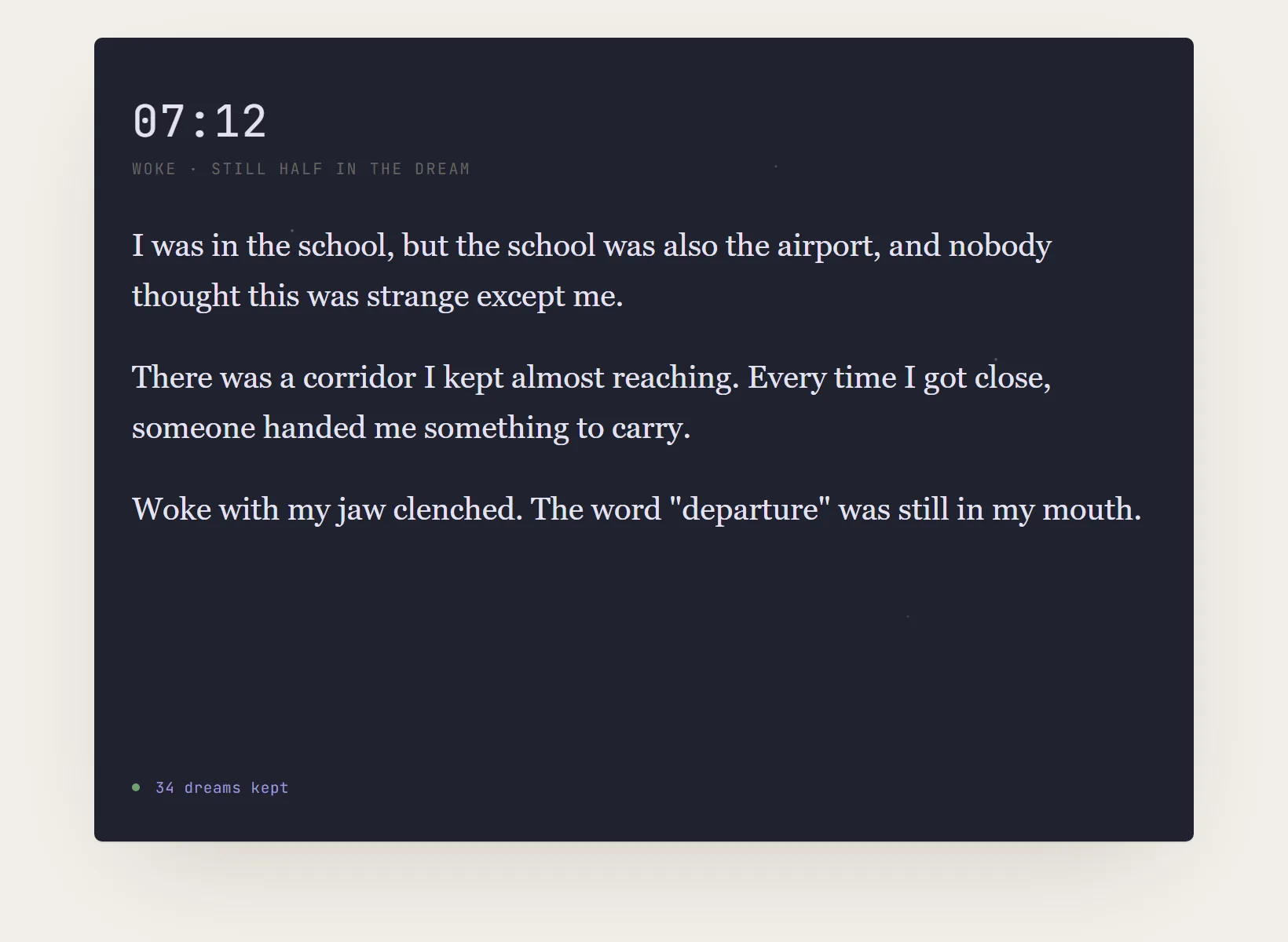
A dream journal is a race against roughly four minutes. Most people lose because they try to write sentences. Fragments first, sentences later, and the dream stays.
What it looks like
How to start a dream journal
Keep it open before you sleep
The page already waiting is what makes the difference at six in the morning.
Write fragments, not prose
Names, colours, the one image, the feeling. Go back and join them up afterwards.
Do not interpret yet
Meaning is still there in an hour. The details are not.
What this journal opens with
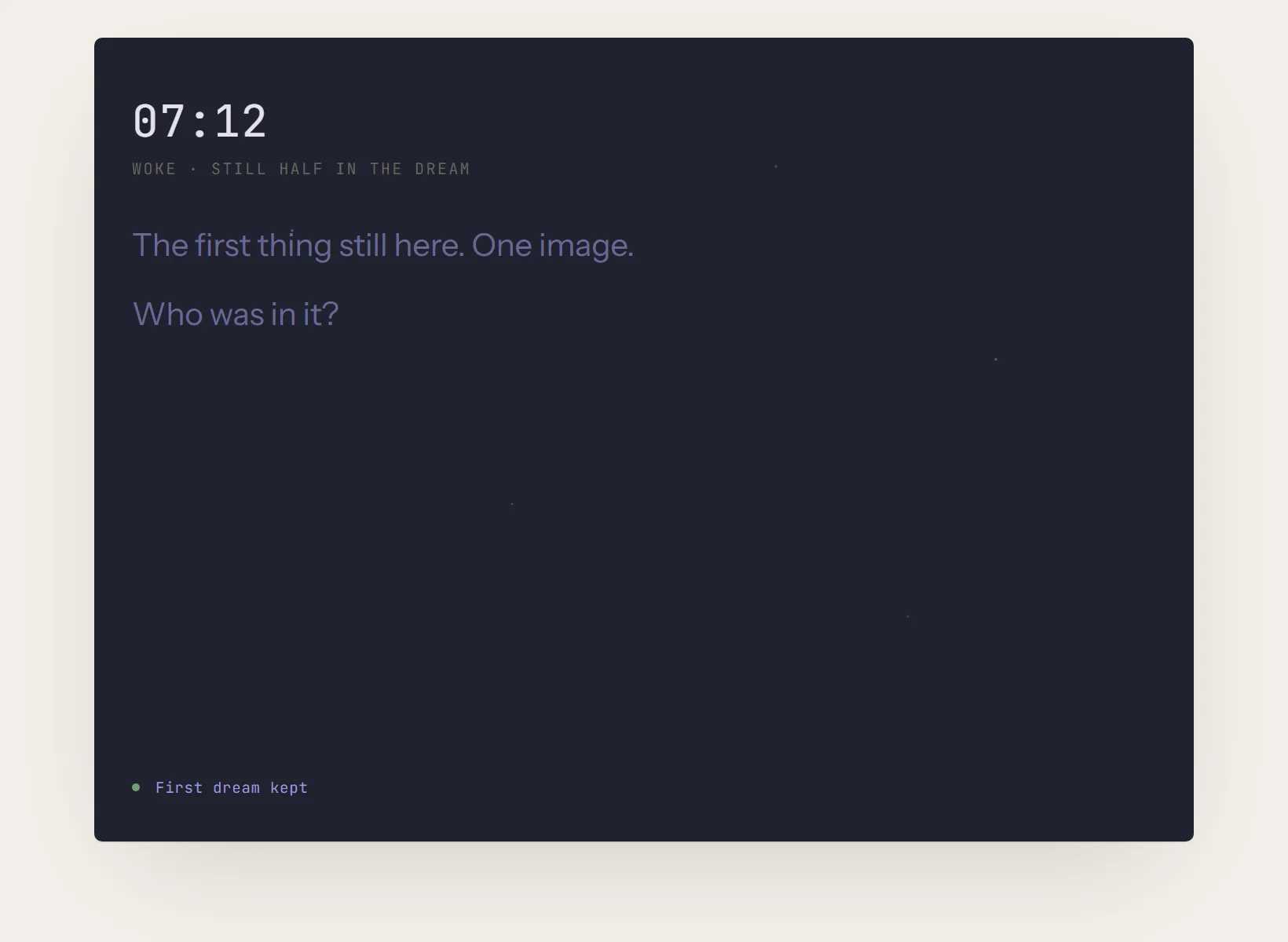
- The first thing still here. One image.
- Who was in it?
A quiet start, never a form. Write past the prompt, ignore it, or make the page your own. The journal holds the shape; the words are yours.
Dream Journal Prompts
A dream journal is a race against about four minutes. Write the images first and in fragments, and only ask what any of it meant once the details are safely down.
- What is the one image still here?
- Who was in it, and were they themselves?
- Where was it, and was it a real place?
- What were you doing, or trying to do?
- What was said, word for word if you can?
Private like a notebook
No ads. No trackers. Nothing trains on what you write. Search across years, sync between your devices, and export everything as Markdown or Day One whenever you like. How privacy works →
Part of Innerholm+. A good paper journal costs $30 to $40, for one chapter. Plus opens every edition for $40 a year, or $5 a month, and the free editions stay free because Plus pays for them.