In the photo roll
Forty thousand photographs and no caption on any of them. What made the day was mostly said out loud, and the camera got none of it.
In the book
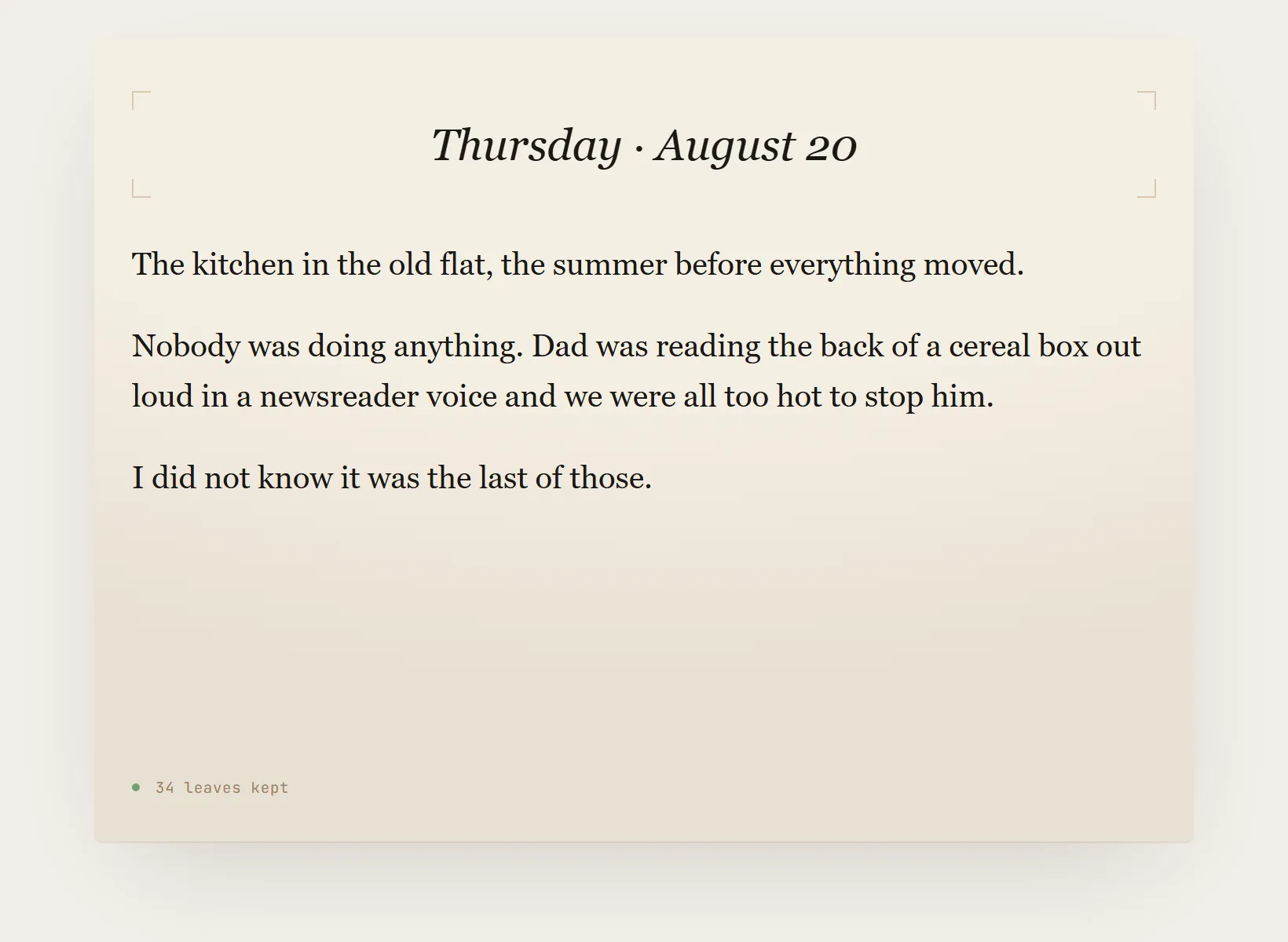
One memory to an entry, with the room and the words left in. Search a name or a year and the whole of it comes back.
The blank page
Memory work is usually attempted in one long sitting, which is why it is usually abandoned. Nobody can write a life in an evening. One memory at a time, with the detail left in, builds the same book without the dread.
What it looks like
How to start a memory journal
Take one memory per entry
Stay inside it for the whole page rather than surveying a decade in paragraphs.
Chase the senses first
What the room smelled like, what the light was doing. Meaning you can reconstruct later; detail you cannot.
Start with the ones someone else remembers too
A memory you can check against another person gets the details you would otherwise guess at. Ask them what they remember and write down both versions.
What this journal opens with
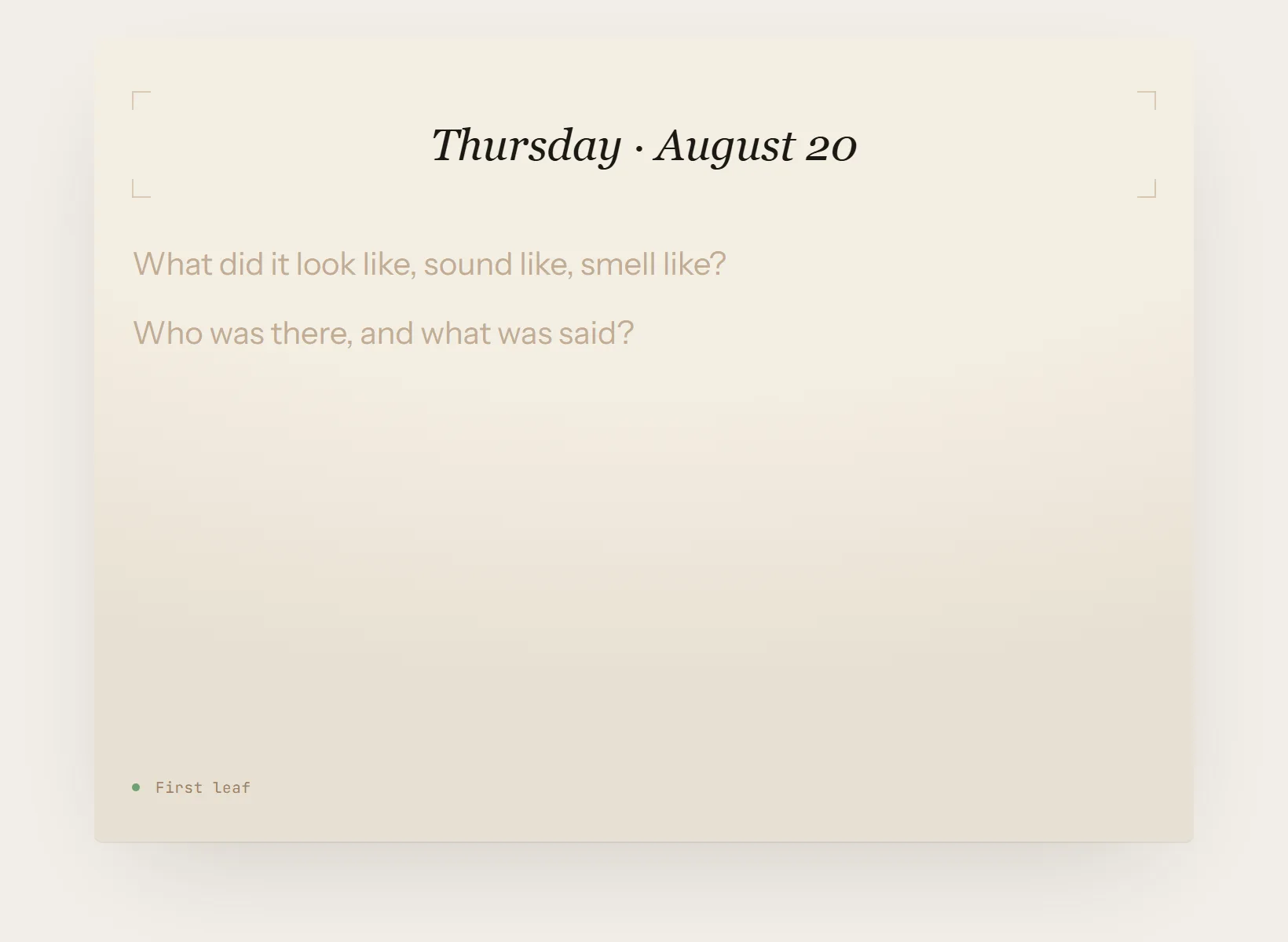
- What did it look like, sound like, smell like?
- Who was there, and what was said?
A quiet start, never a form. Write past the prompt, ignore it, or make the page your own. The journal holds the shape; the words are yours.
Memory Journal Prompts
Memory prompts should ask for sensory detail rather than significance, because significance is the part you can reconstruct later and detail is the part that goes. What the room smelled like is worth more in ten years than what it meant.
- What is the first house you remember, room by room?
- What did your family sound like on an ordinary evening?
- What is a smell that puts you somewhere immediately?
- Who was your first real friend, and how did it start?
- What did the street or road you grew up on look like at dusk?
Private like a notebook
No ads. No trackers. Nothing trains on what you write. Search across years, sync between your devices, and export everything as Markdown or Day One whenever you like. How privacy works →
Part of Innerholm+. A good paper journal costs $30 to $40, for one chapter. Plus opens every edition for $40 a year, or $5 a month, and the free editions stay free because Plus pays for them.