Rated and shelved
The year's reading comes to a row of covers and a score beside each one. The three paragraphs that changed something are still inside them.
The passages kept
The lines copied out, what you thought underneath them, the date on top. Search a phrase five years on and the context comes with it.
The blank page
Reading logs turn into lists of titles, and a list of titles tells you nothing five years on. What you copied out, what you argued with, and what was happening in your life that week is the part worth keeping.
What it looks like
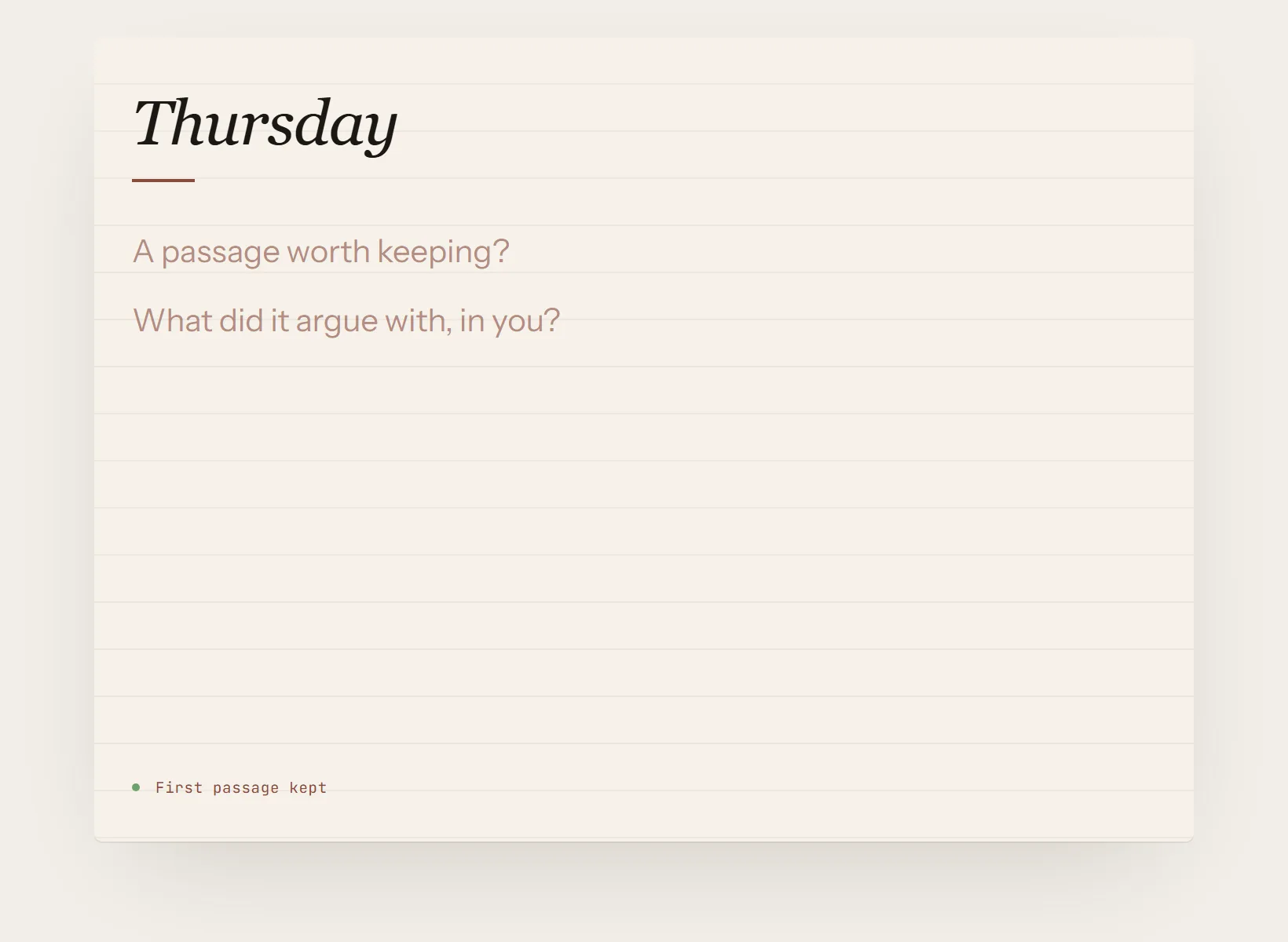
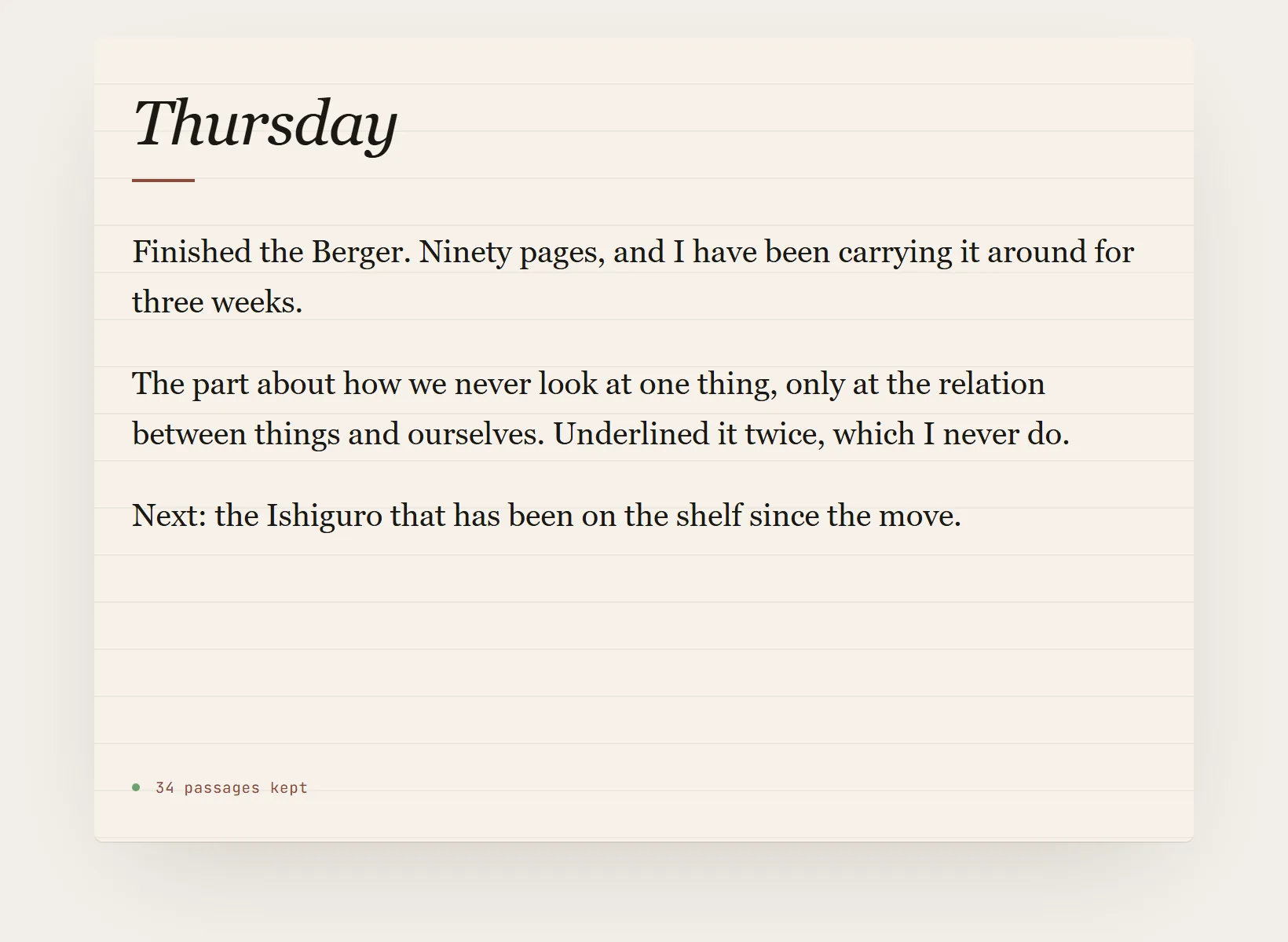
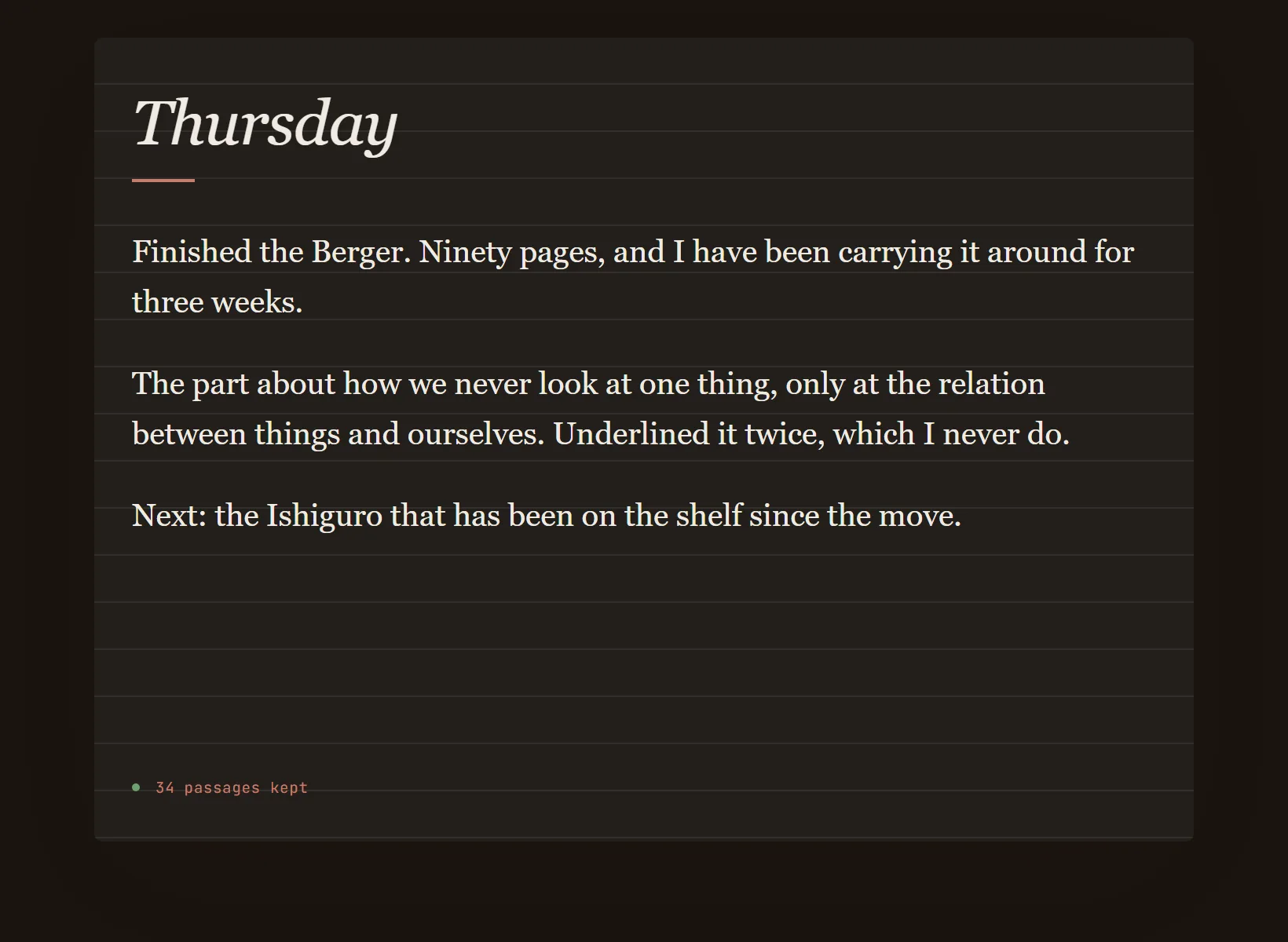
How to start a reading journal
Copy the passage out
By hand or typed. The copying is where the reading slows down enough to stick.
Answer one question underneath it
What made you stop there, or what you disagree with. Two sentences is enough.
Write the verdict a day late
What you think at the last page and what you think the next morning are different, and the second one is truer.
What this journal opens with
- A passage worth keeping?
- What did it argue with, in you?
A quiet start, never a form. Write past the prompt, ignore it, or make the page your own. The journal holds the shape; the words are yours.
Reading Journal Prompts
A reading journal is worth keeping when it records the reader as well as the book. What you copied out, what you argued with, and what was going on in your life the week you read it are the three things you will not be able to reconstruct later.
- What passage did you stop at, and what made you stop?
- What is this book arguing, and do you believe it yet?
- What does the writer do with sentences that you would like to steal?
- Which character are you defending, and which are you unfairly against?
- What does this remind you of, from your own life or another book?
Private like a notebook
No ads. No trackers. Nothing trains on what you write. Search across years, sync between your devices, and export everything as Markdown or Day One whenever you like. How privacy works →
Part of Innerholm+. A good paper journal costs $30 to $40, for one chapter. Plus opens every edition for $40 a year, or $5 a month, and the free editions stay free because Plus pays for them.
Twelve reading journal prompts.
Enter your email and I'll send the twelve prompts, then two short notes to help you begin, and the one note saying Innerholm is open. After that, about one letter a month. One click stops all of it.