Reconstructing March
In November, what happened in March exists in a search through old messages, and the reasoning behind any of it is gone.
Reading March back
Three lines at the end of each day, dated and searchable. In November, March is a page you open.
The blank page
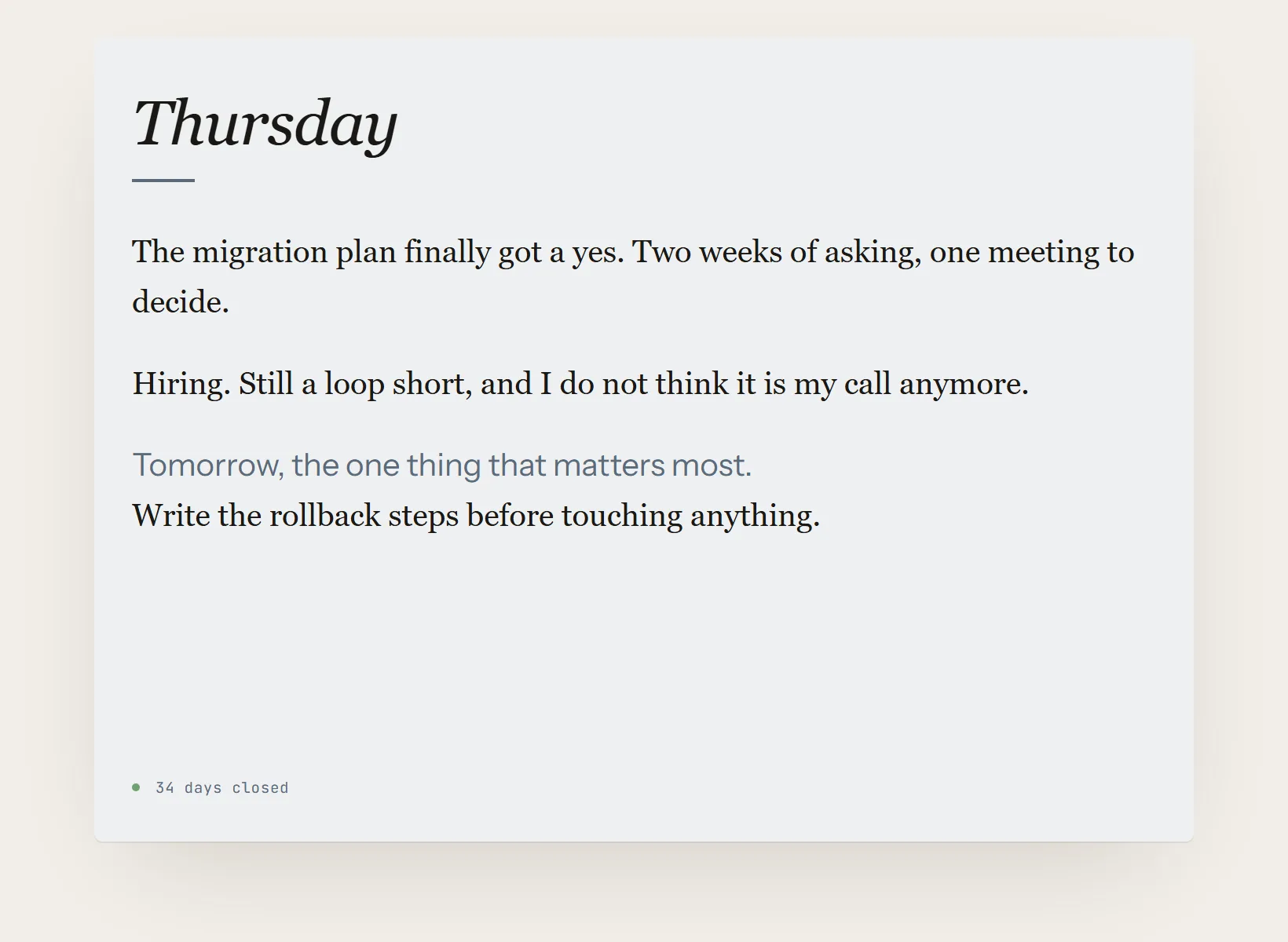
A work journal usually dies because it drifts into a status report, and nobody wants to write one of those for themselves. Three lines at the end of the day is the version that survives, and in a year it is evidence.
What it looks like
How to start a work journal
Close the day before you leave it
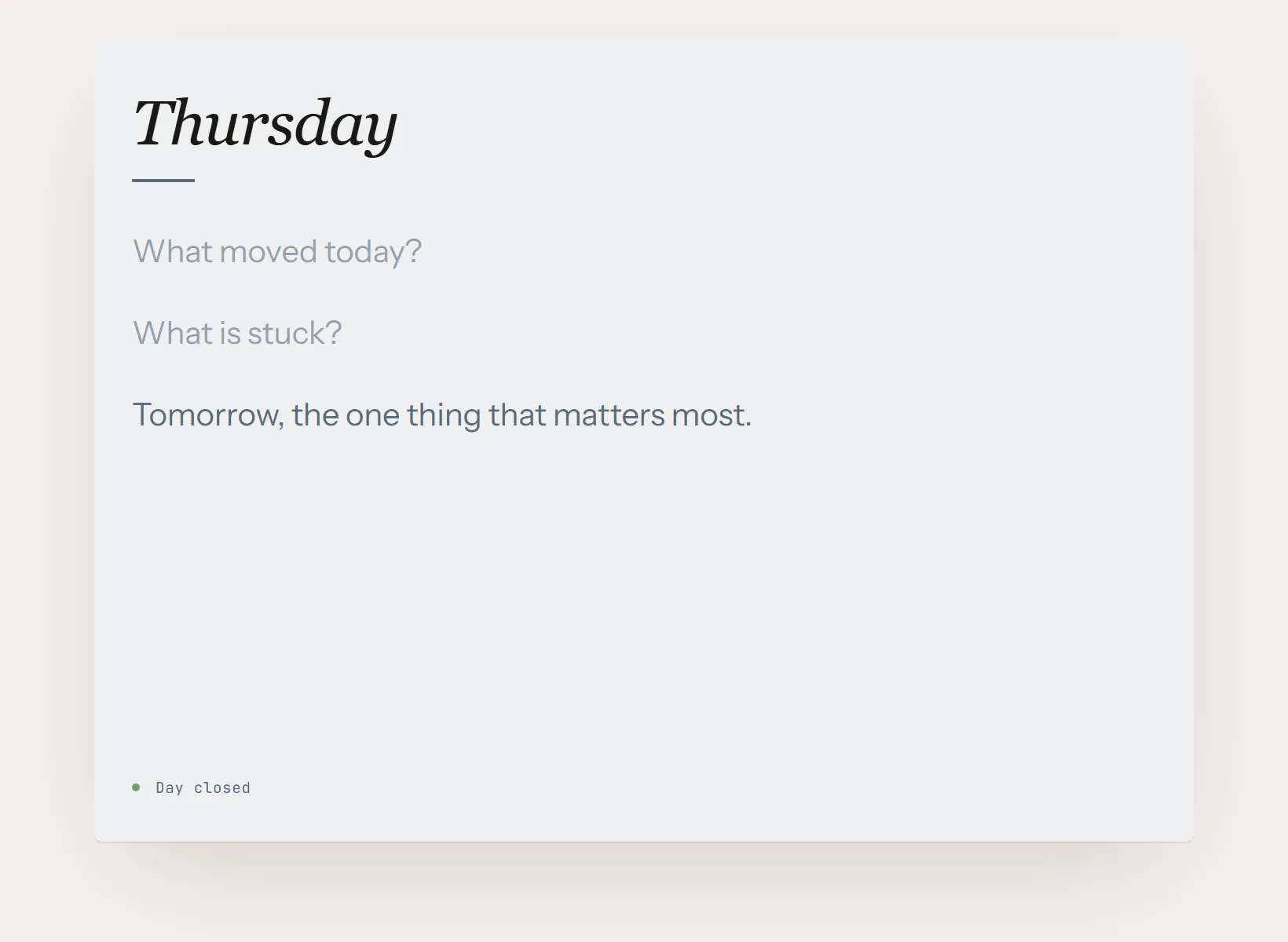
What moved, what is stuck, and the one thing that matters tomorrow.
Write the decisions and why
The reasoning is the part you will want back, and the part memory drops first.
Read it back once a quarter
It is the only honest account you will have of what you actually did.
What this journal opens with
- What moved today?
- What is stuck?
- Tomorrow, the one thing that matters most.
A quiet start, never a form. Write past the prompt, ignore it, or make the page your own. The journal holds the shape; the words are yours.
Work Journal Prompts
A work journal is not a status report. It exists so that you can close the day before you carry it home, and so that in a year you can prove to yourself what actually happened rather than trusting a memory that keeps only the bad parts.
- What moved today?
- What is stuck, and what is it actually stuck on?
- What is the one thing that matters most tomorrow?
- What took far longer than it should have, and why?
- What did you decide today, and on what basis?
Private like a notebook
No ads. No trackers. Nothing trains on what you write. Search across years, sync between your devices, and export everything as Markdown or Day One whenever you like. How privacy works →
Part of Innerholm+. A good paper journal costs $30 to $40, for one chapter. Plus opens every edition for $40 a year, or $5 a month, and the free editions stay free because Plus pays for them.