In three places
What you meant to raise is on a receipt, a phone reminder, and the back of an envelope. Two of the three are already lost.
In one record
One dated place for what happened and what helped, and five minutes at the end that are only yours. Search a date and the exact note is there, times and all.
The blank page
A caregiving journal has to do two jobs at once, and the second one usually gets dropped: the practical record for the next appointment, and somewhere you get to be a person rather than a role. Both belong here.
What it looks like
How to start a caregiving journal
Write the practical note while it is exact
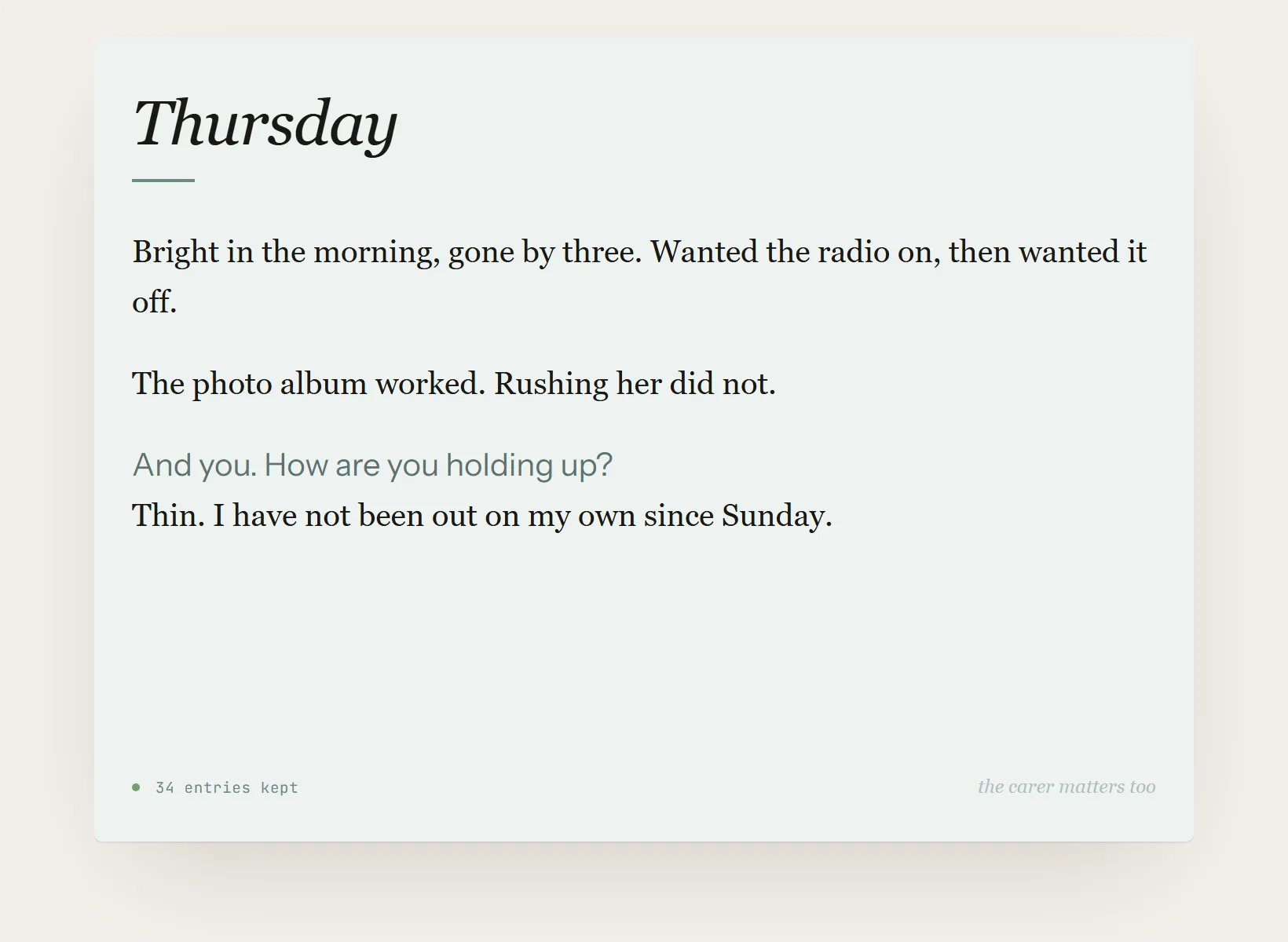
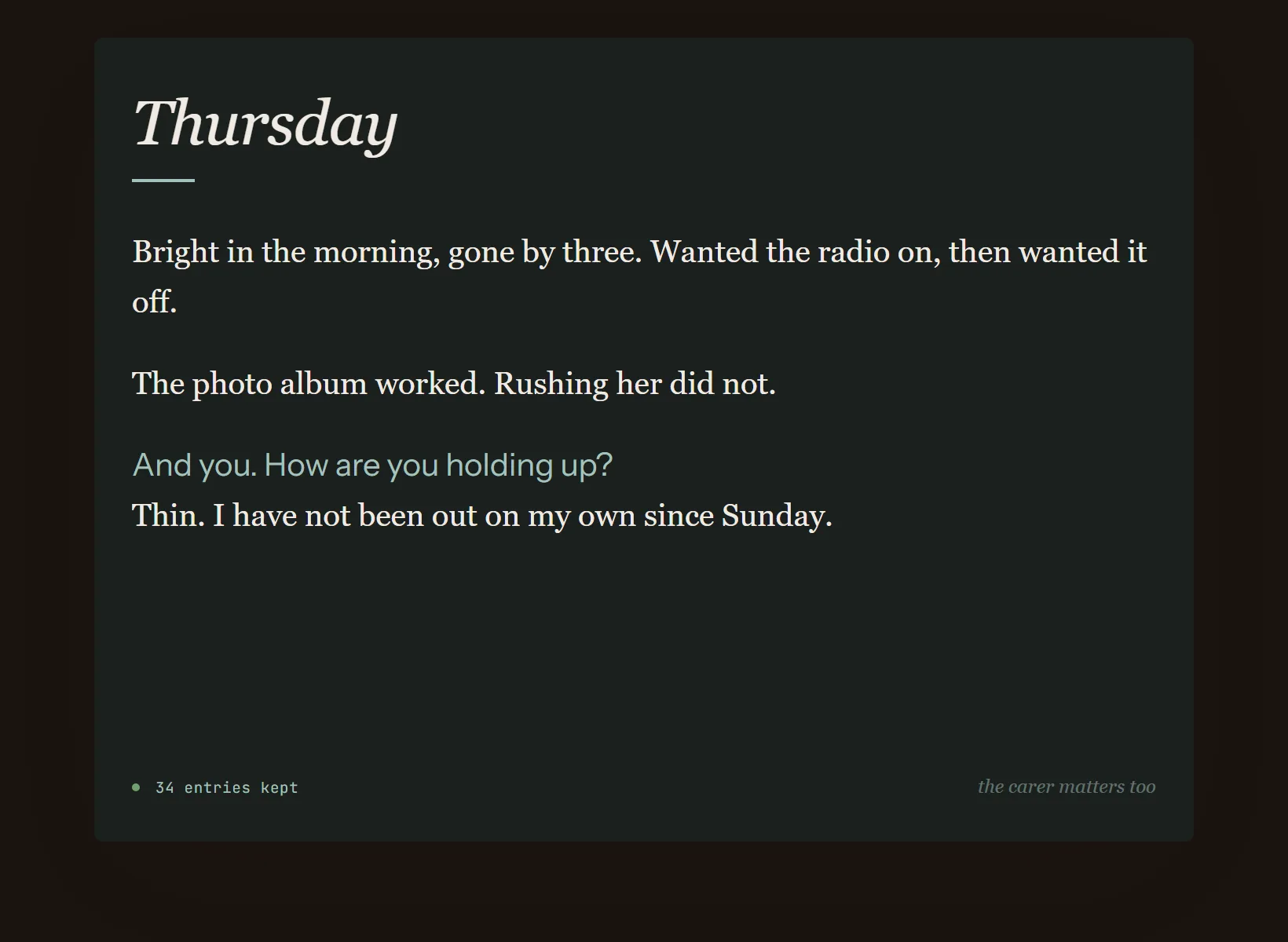
What they needed, what worked, what to raise next time. Times and doses beat impressions.
Then take five more minutes for yourself
How you are holding up, honestly, with nobody reading it.
Keep the good moments too
They are hard to recall later, and they are the reason the record is worth having.
What this journal opens with
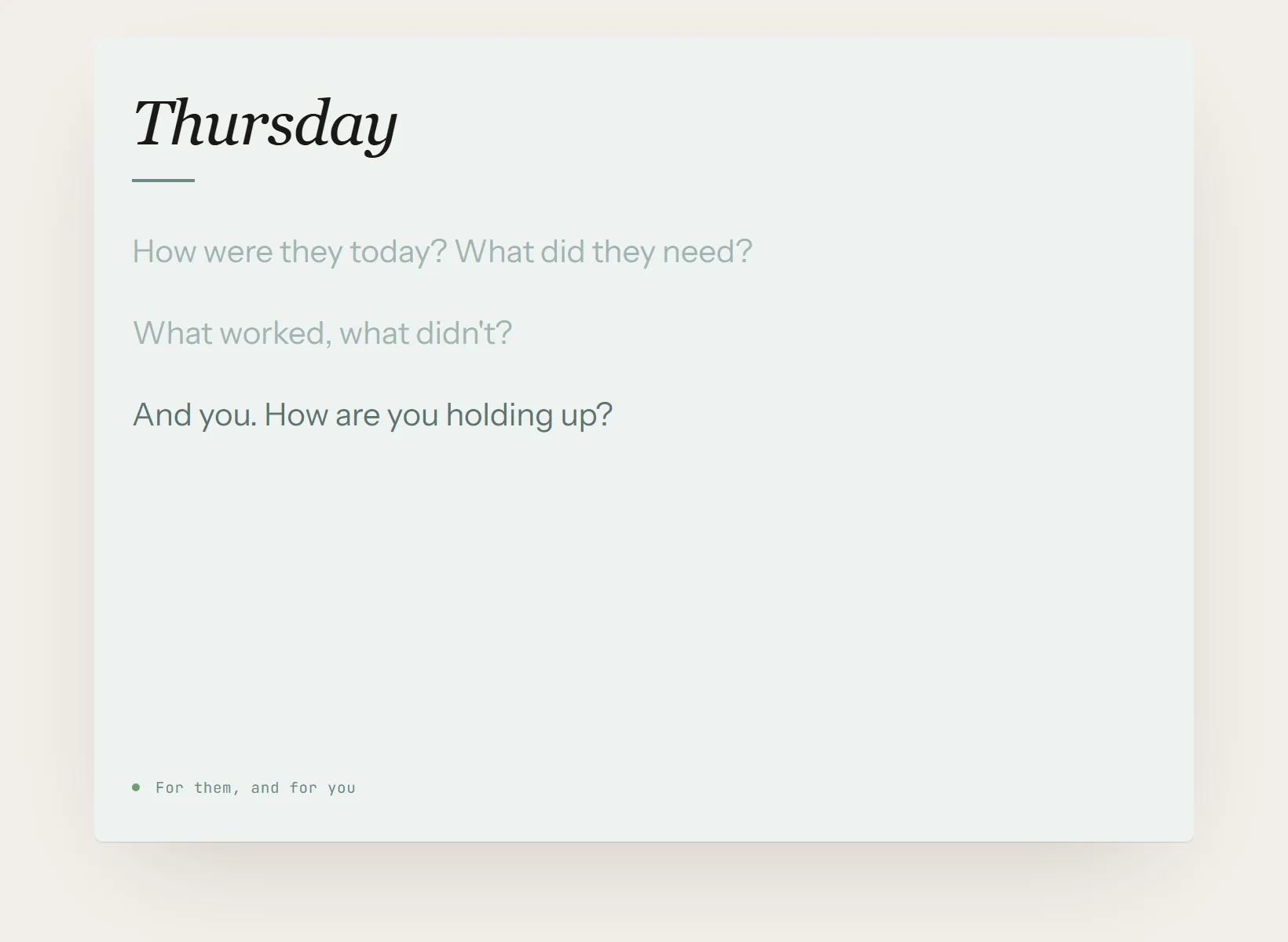
- How were they today? What did they need?
- What worked, what didn't?
- And you. How are you holding up?
A quiet start, never a form. Write past the prompt, ignore it, or make the page your own. The journal holds the shape; the words are yours.
Caregiving Journal Prompts
A caregiving journal does two jobs: it keeps the practical record that the next appointment will need, and it gives you somewhere to be a person rather than a role. Both halves are here, and the second one matters as much.
- How were they today, compared with yesterday?
- What did they need, and what worked?
- What did not work, and what would you try instead?
- What should you raise at the next appointment, in their words and yours?
- What changed this week that someone taking over would need to know?
Private like a notebook
No ads. No trackers. Nothing trains on what you write. Search across years, sync between your devices, and export everything as Markdown or Day One whenever you like. How privacy works →
Free, always. Write, search, sync, and export, with no credit card and no trial clock.