On an ordinary Tuesday
The thing you would have told them arrives in the middle of the afternoon, and there is nowhere to put it down.
At any hour
A page open whenever you reach for it, addressed however you want to address it. No prompt waiting, no weeks to make up, and it is there again when you come back.
The blank page
Most grief journals ask you to work through something on a schedule. There is no schedule here, and nothing you should be feeling by now. It is a place to keep talking to someone, for as long as you want to.
What it looks like
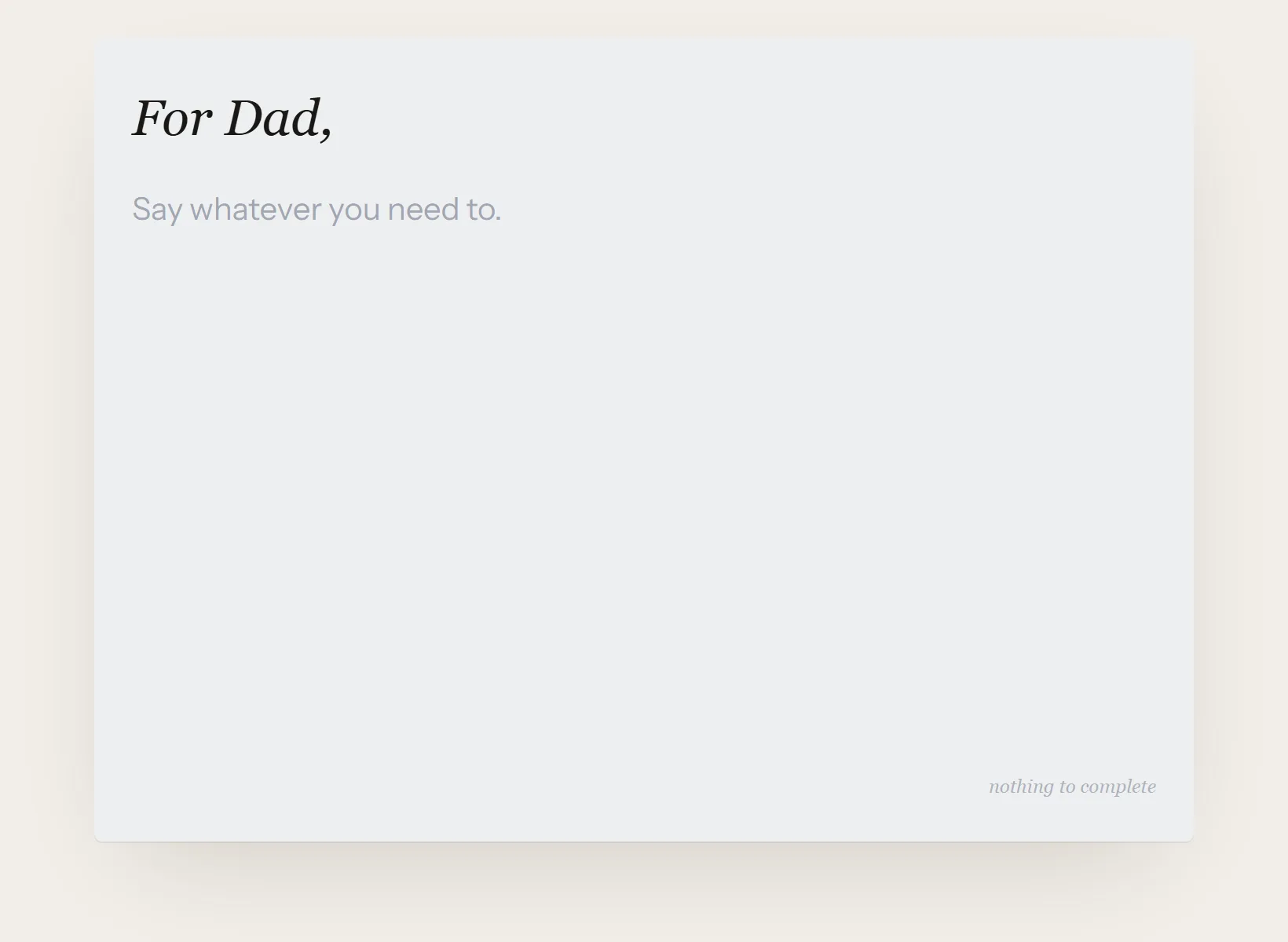
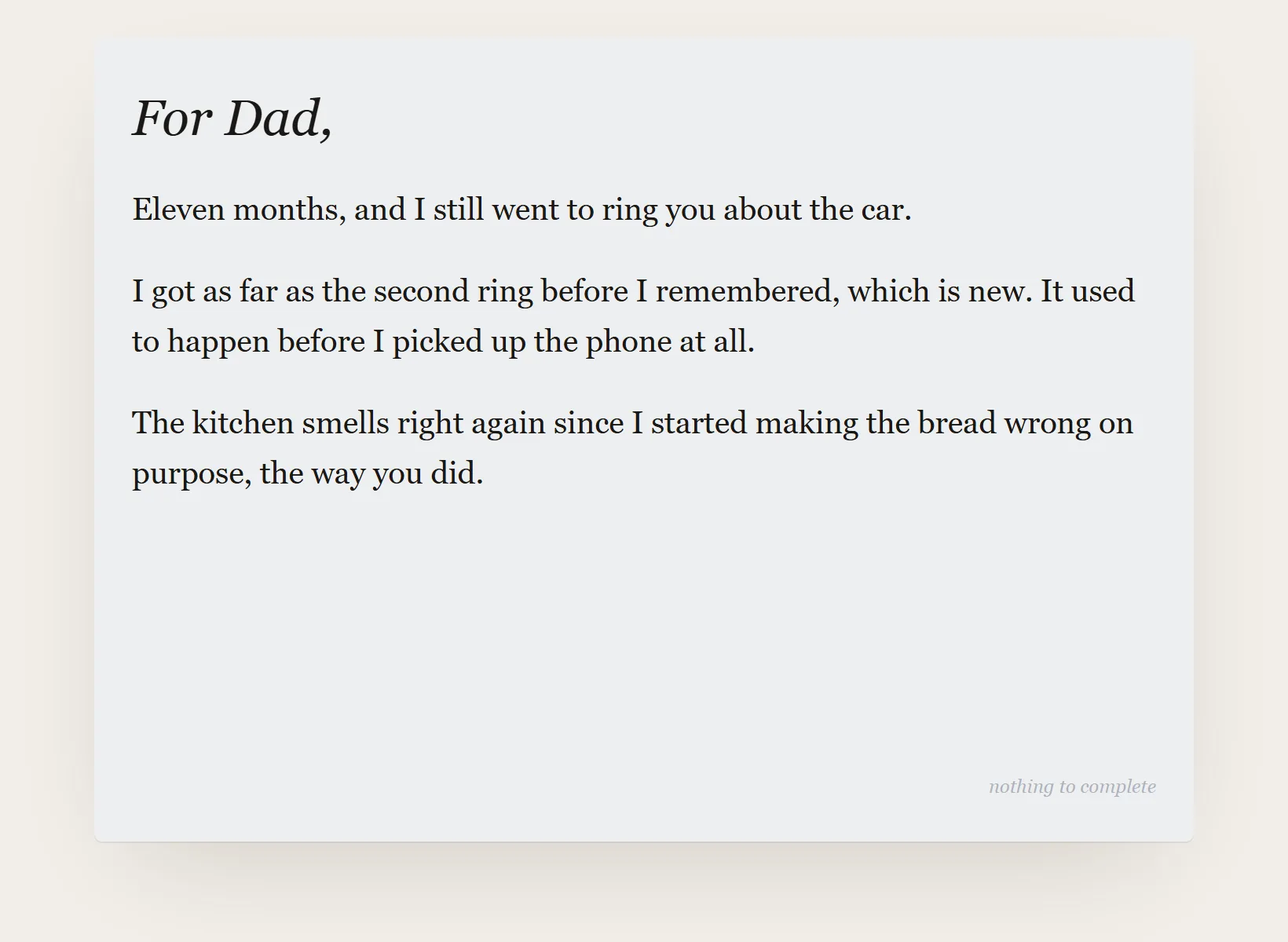
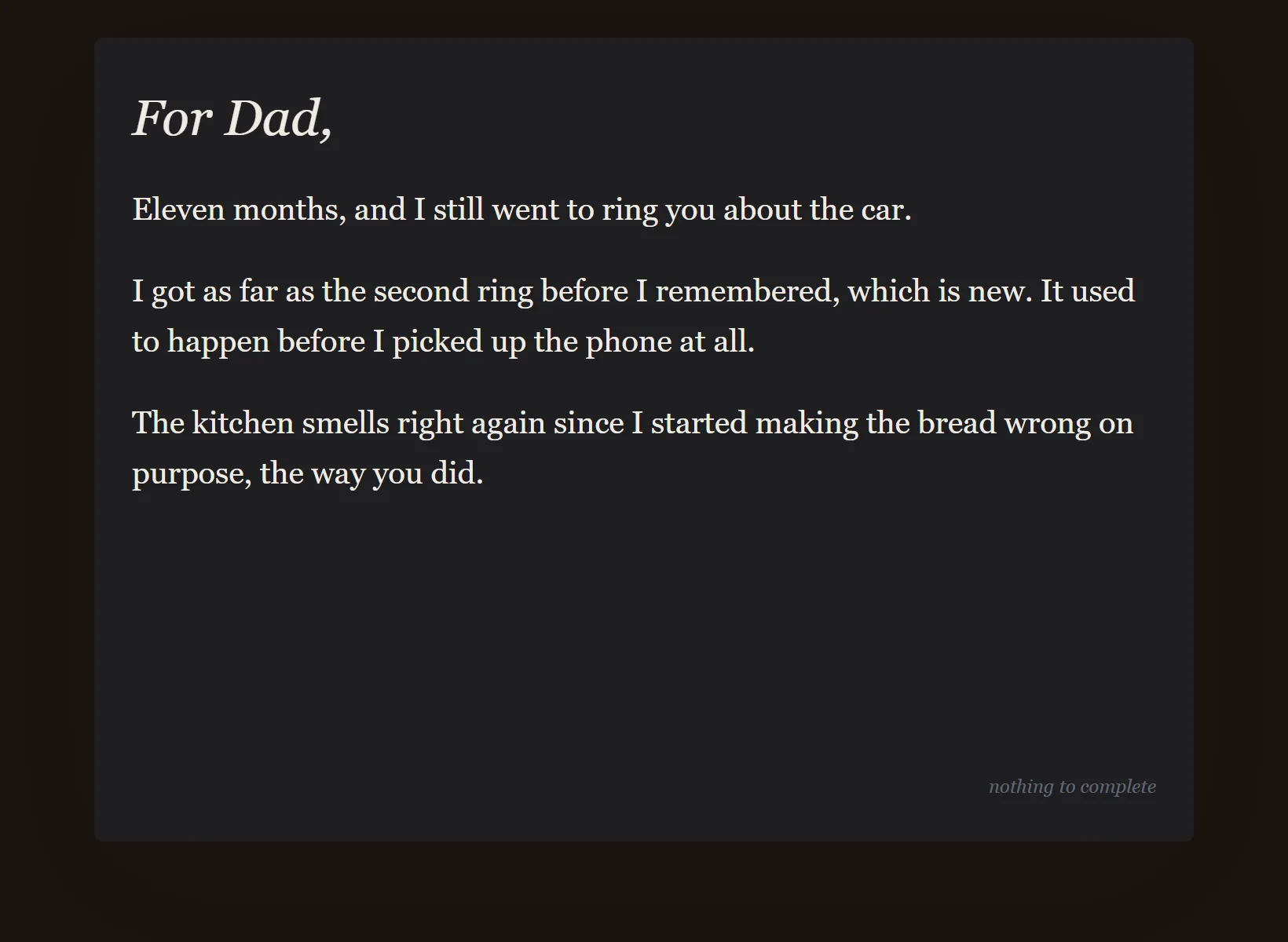
How to start a grief journal
Write to them, not about them
Address the page directly. It is usually easier than a description, and it is the part that helps.
Keep the small things
How they said your name, what they always got wrong. The unimportant details are the first to go.
Come back whenever, or not
Leaving it for a month is not falling behind. The page is not waiting on you.
What this journal opens with
- Say whatever you need to.
A quiet start, never a form. Write past the prompt, ignore it, or make the page your own. The journal holds the shape; the words are yours.
Grief Journal Prompts
There is no order to these and nothing here you should be feeling by now. They are ways to keep talking to someone, and to put down things that have nowhere else to go.
- What would you tell them about today?
- What do you wish you had said?
- What do you want to say now that you could not say then?
- What would they say to you about how you are doing?
- What would you ask them, if you could ask one thing?
Private like a notebook
No ads. No trackers. Nothing trains on what you write. Search across years, sync between your devices, and export everything as Markdown or Day One whenever you like. How privacy works →
Free, always. Write, search, sync, and export, with no credit card and no trial clock.