Told at the table
What this year was actually like gets said out loud twice and then rounded off. Nothing keeps the version with the detail still in it.
Written and dated
A letter addressed to the you who opens it, filed with the others. Five years on, this year arrives in your own words rather than a summary.
The blank page
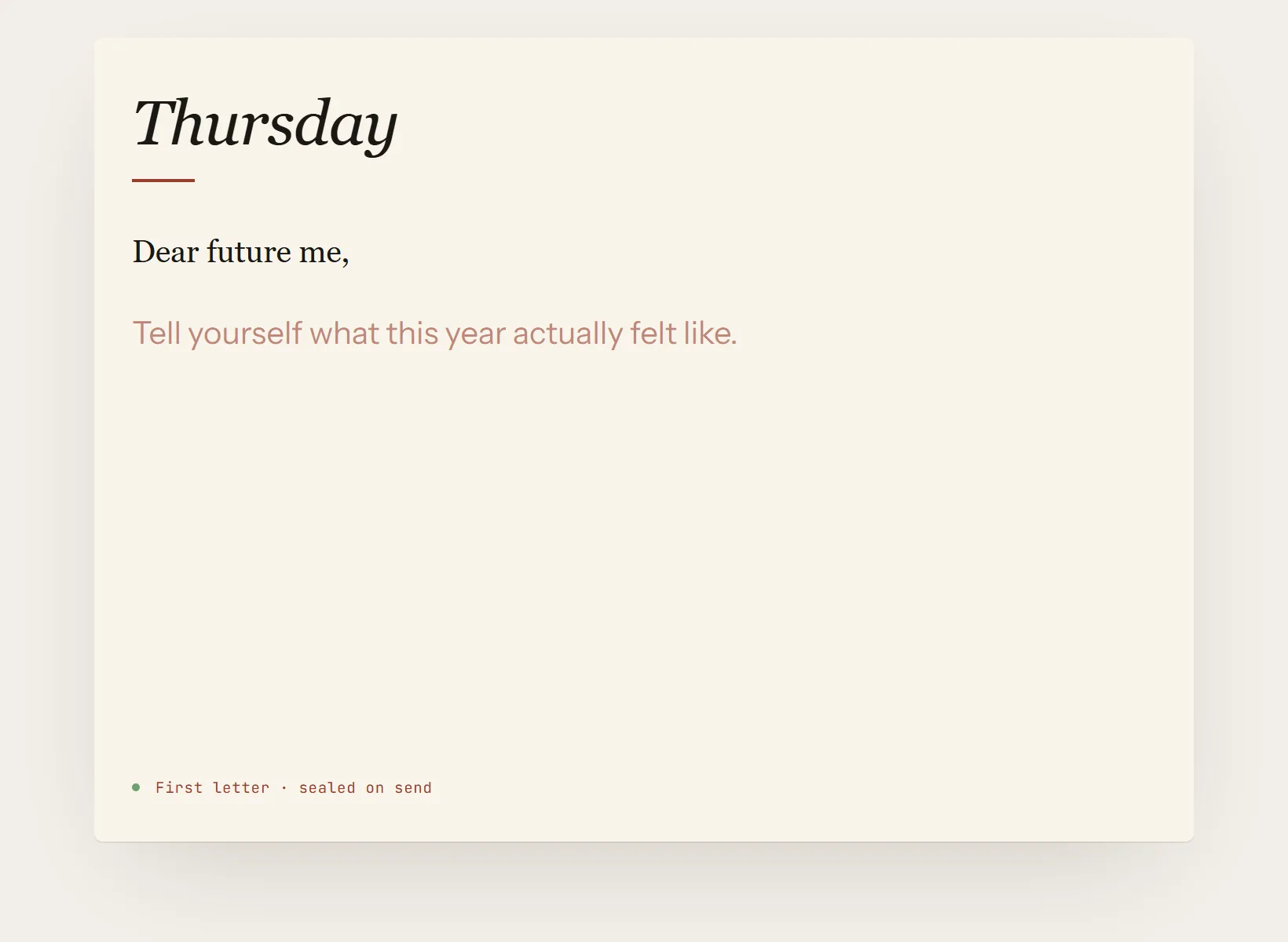
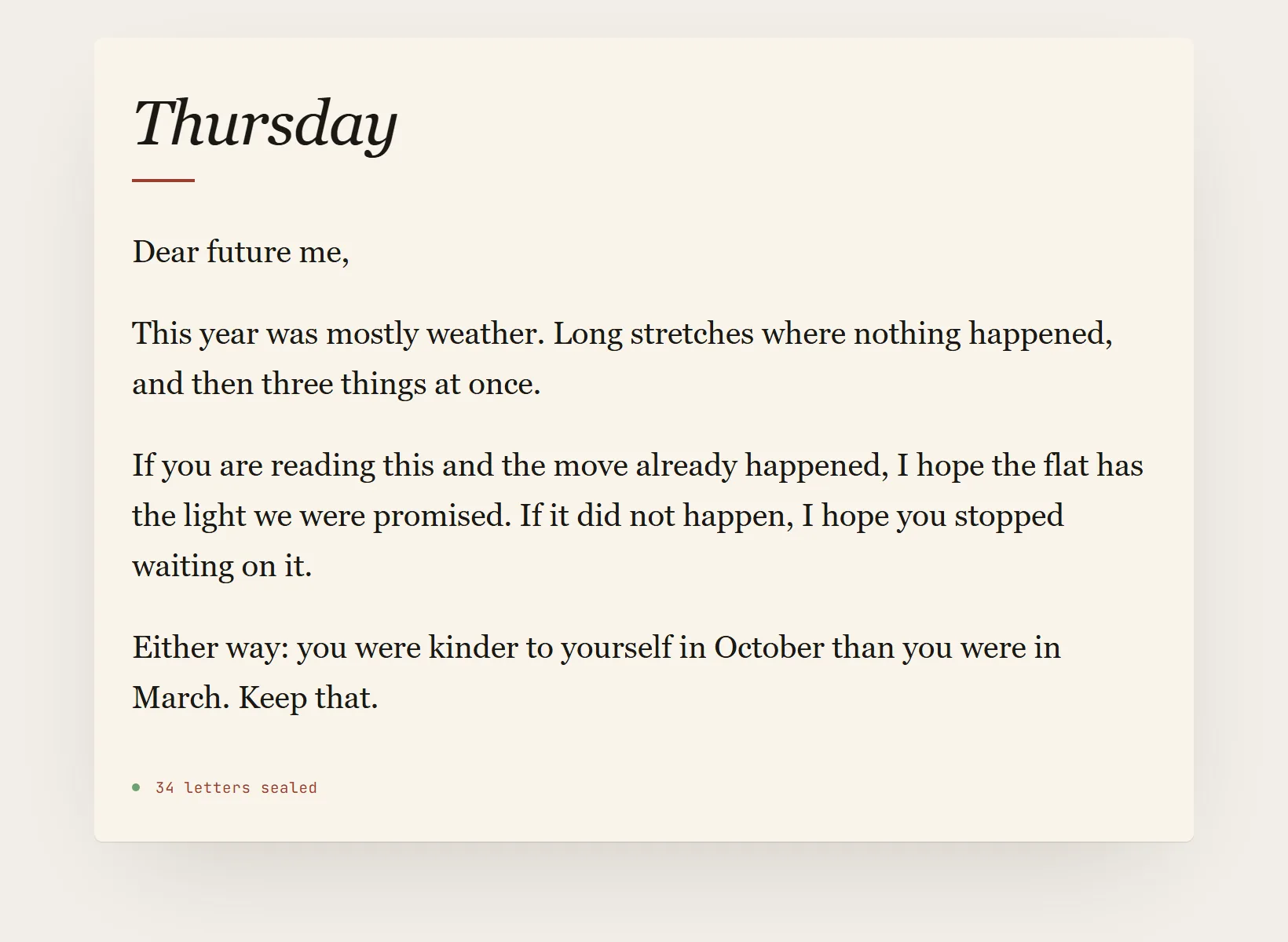
Letters to your future self stall on the question of what is worth saying, so people write something general and impressive and then never reread it. The useful letter is the plain one: what today was actually like, before memory rounds it off.
What it looks like
How to start Letters to your future self
Address a specific person
You, at a specific age or after a specific thing. A letter to nobody in particular reads like a diary entry.
Date what you expect, not just what happened
Predictions are what make a letter worth opening later, including the ones you get wrong.
Say when it should be read
A year, five years, after the move. Naming the moment gives the letter its shape.
What this journal opens with
- Tell yourself what this year actually felt like.
A quiet start, never a form. Write past the prompt, ignore it, or make the page your own. The journal holds the shape; the words are yours.
Letter to My Future Self Prompts
A letter to your future self is worth writing because memory rounds everything off. Write down what today actually felt like, in the words you would use to a friend, and let a later you read back something that has not been smoothed over.
- What does an ordinary day look like for you right now?
- Who matters most to you right now, and what are they like?
- What is the best thing about your life as it is today?
- What are you proud of that nobody else knows about?
- What does your home look like right now, room by room?
Private like a notebook
No ads. No trackers. Nothing trains on what you write. Search across years, sync between your devices, and export everything as Markdown or Day One whenever you like. How privacy works →
Part of Innerholm+. A good paper journal costs $30 to $40, for one chapter. Plus opens every edition for $40 a year, or $5 a month, and the free editions stay free because Plus pays for them.