The drawer
Eleven entries from Lent and nothing since. The verses you underlined this year are in the margins of four different books.
The one book
The reading and the examen in one place, dated and searchable. The thin weeks stay in the record beside the rest of it.
The blank page
A faith journal is usually abandoned in the middle, where the words go thin and it feels dishonest to write the same prayer again. The middle is the part worth keeping, and doubt on the page is not a failure of the practice.
What it looks like
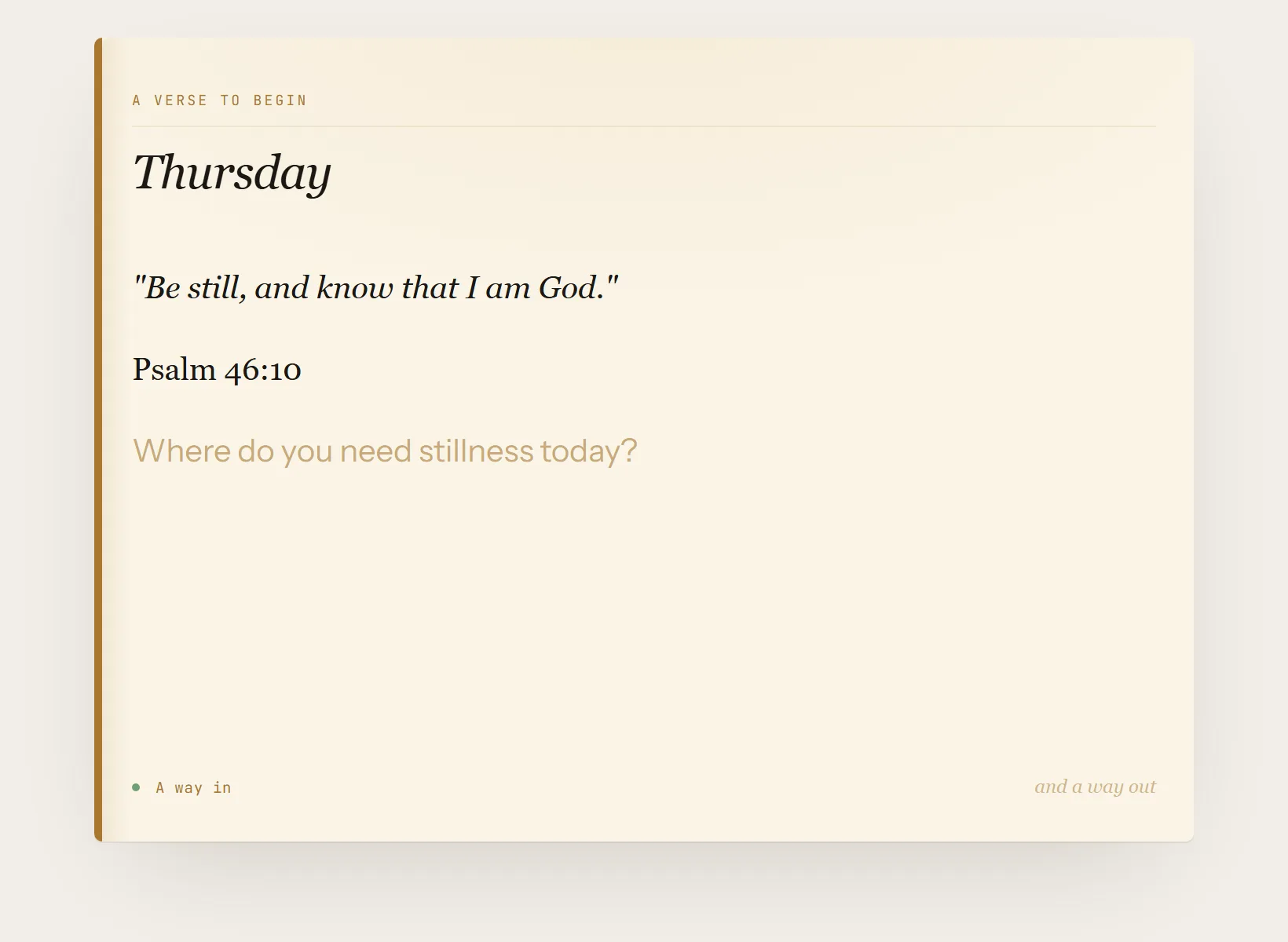
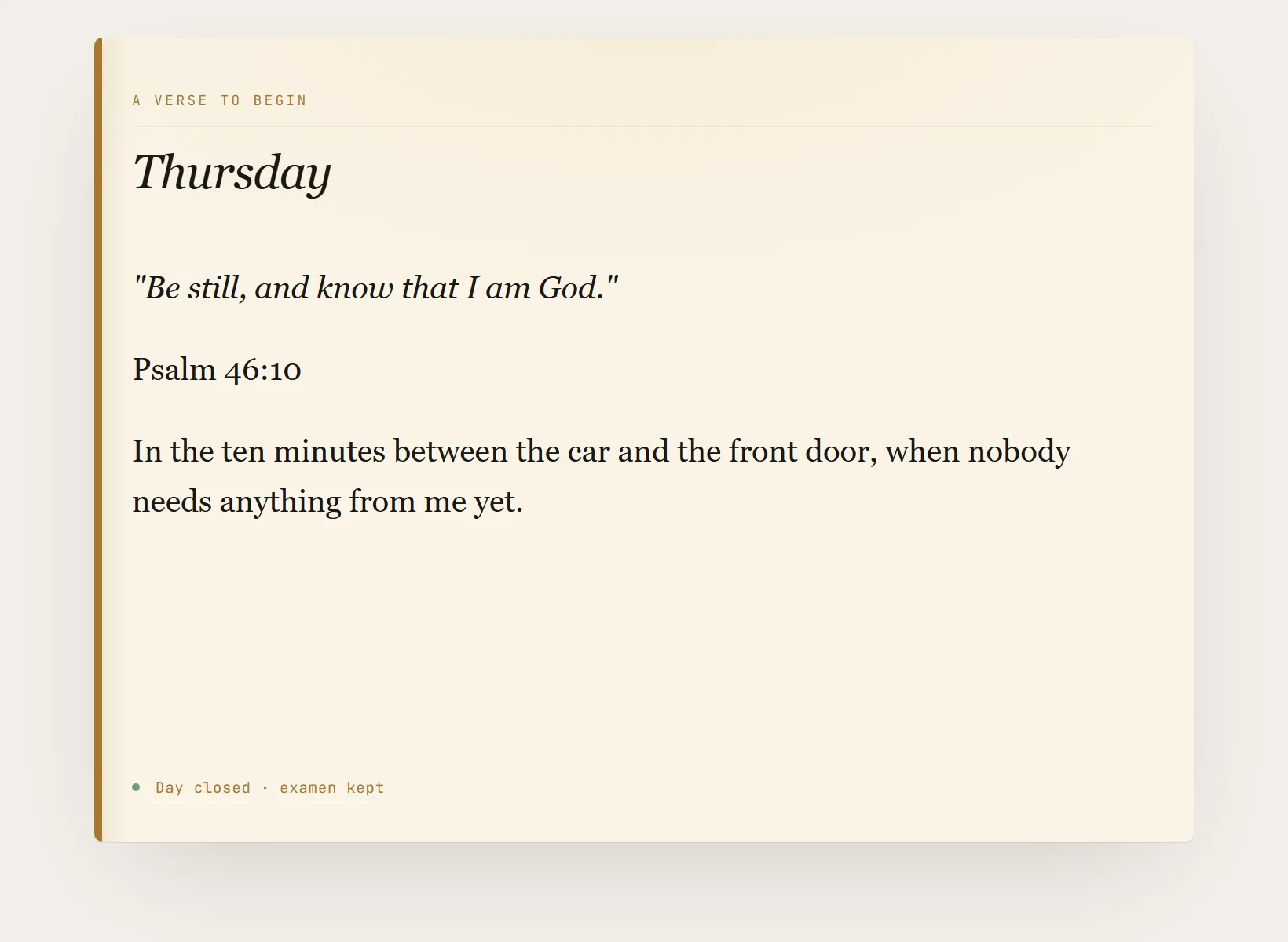
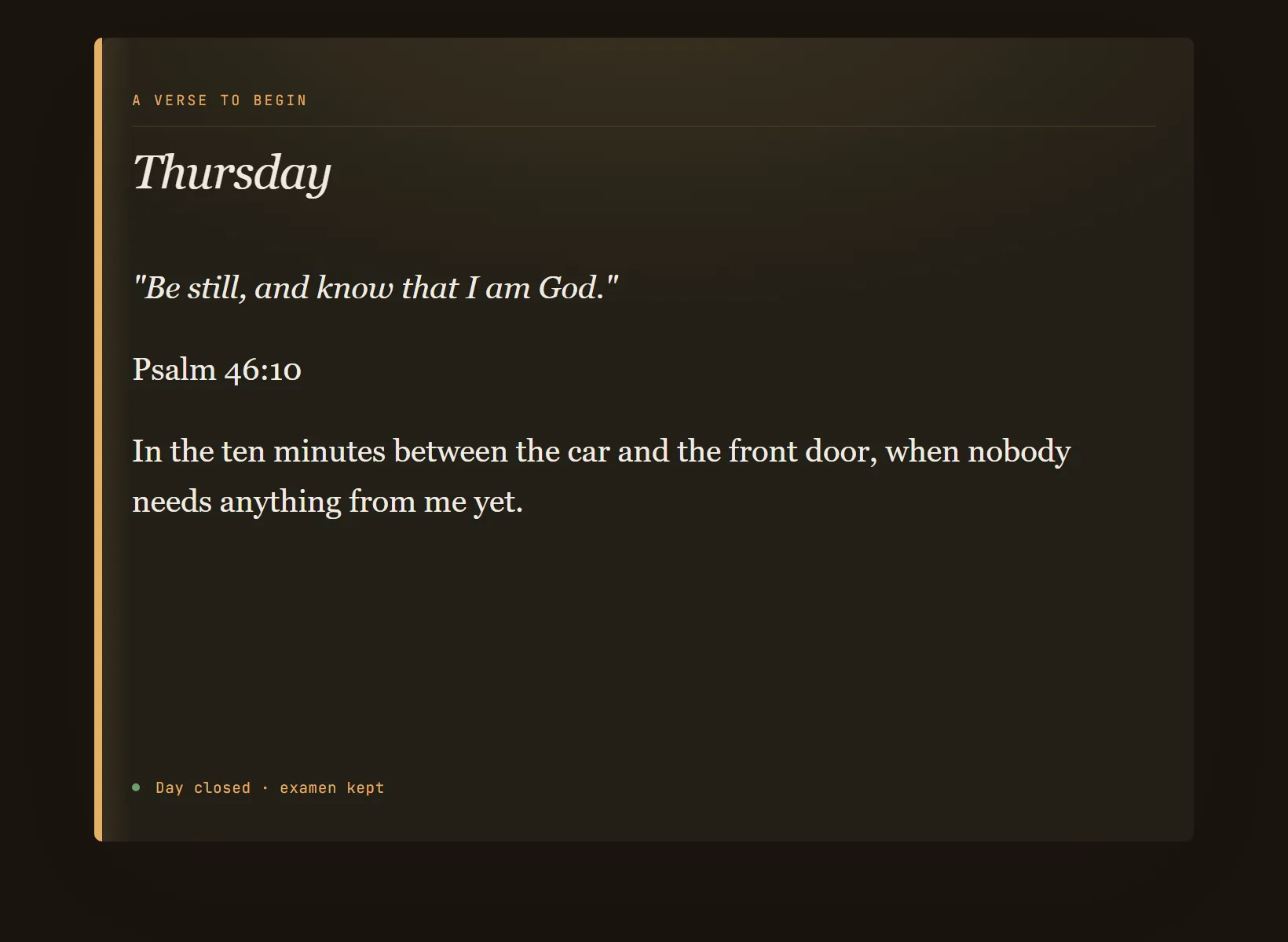
How to start a faith journal
Begin with something read
A verse, a line, a psalm. Reading first gives the writing somewhere to start on the days nothing comes.
Close the day with the examen
Where you were still, where you were not, and what you would ask for. Three lines will do it.
Say the thin weeks plainly
If the honest entry is that this is quiet at the moment, write that. It is a truer record than a page of good sentences.
What this journal opens with
- Where do you need stillness today?
A quiet start, never a form. Write past the prompt, ignore it, or make the page your own. The journal holds the shape; the words are yours.
Faith Journal Prompts
A faith journal keeps the conversation going in your own words, on the days when the words are thin as much as the days they are not. These prompts follow the old shape of a morning reading and an evening examen.
- What line from today stayed with you, and why that one?
- Where were you still today, and where were you not?
- What is this passage asking of you, plainly, before any interpretation?
- What did you read today that you would rather it did not say?
- What are you carrying into today that you would like help with?
Private like a notebook
No ads. No trackers. Nothing trains on what you write. Search across years, sync between your devices, and export everything as Markdown or Day One whenever you like. How privacy works →
Part of Innerholm+. A good paper journal costs $30 to $40, for one chapter. Plus opens every edition for $40 a year, or $5 a month, and the free editions stay free because Plus pays for them.