On the shelf
A copy of the Meditations with a bookmark two thirds through, and no page of your own anywhere near it.
Open on the desk
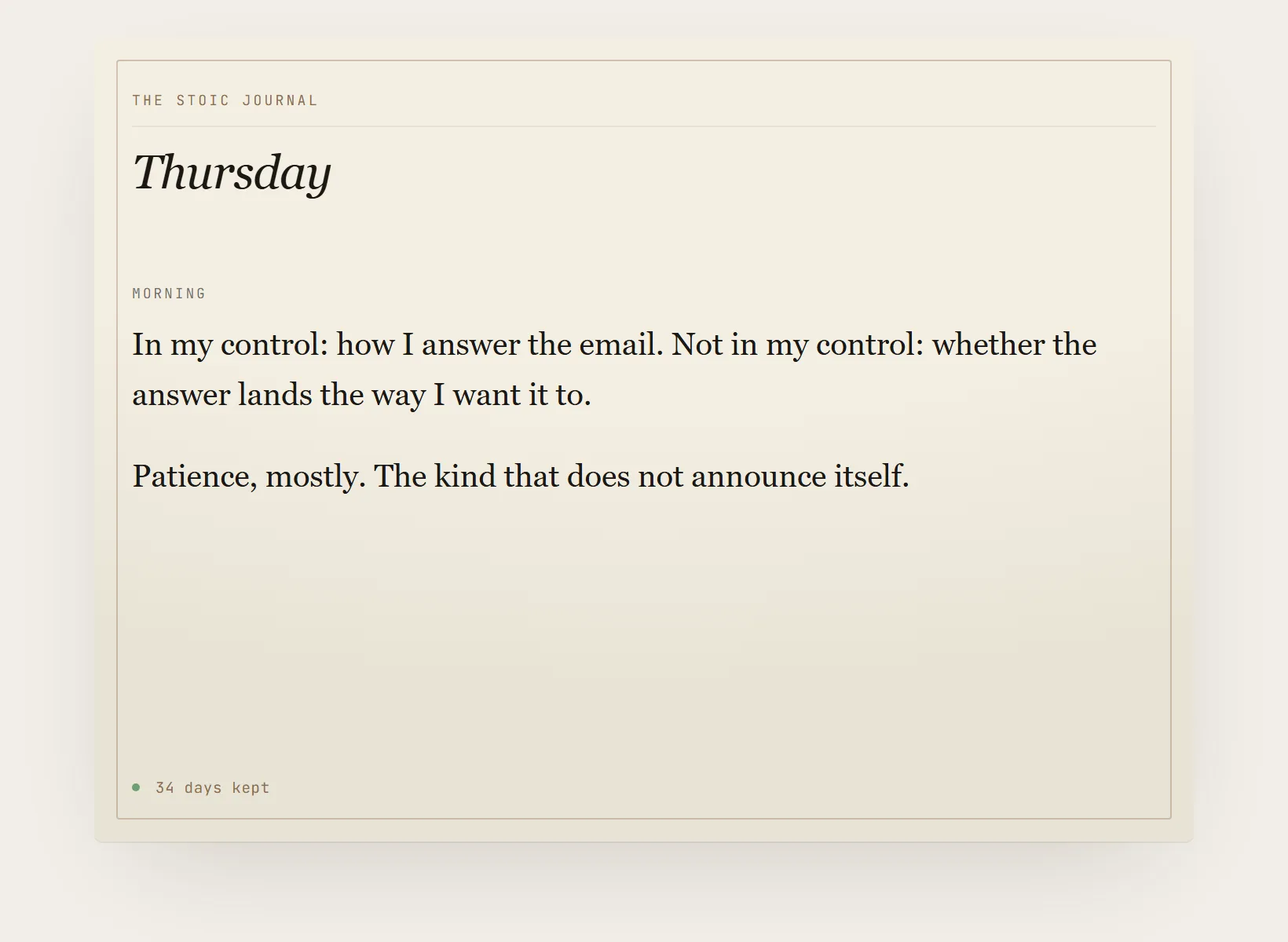
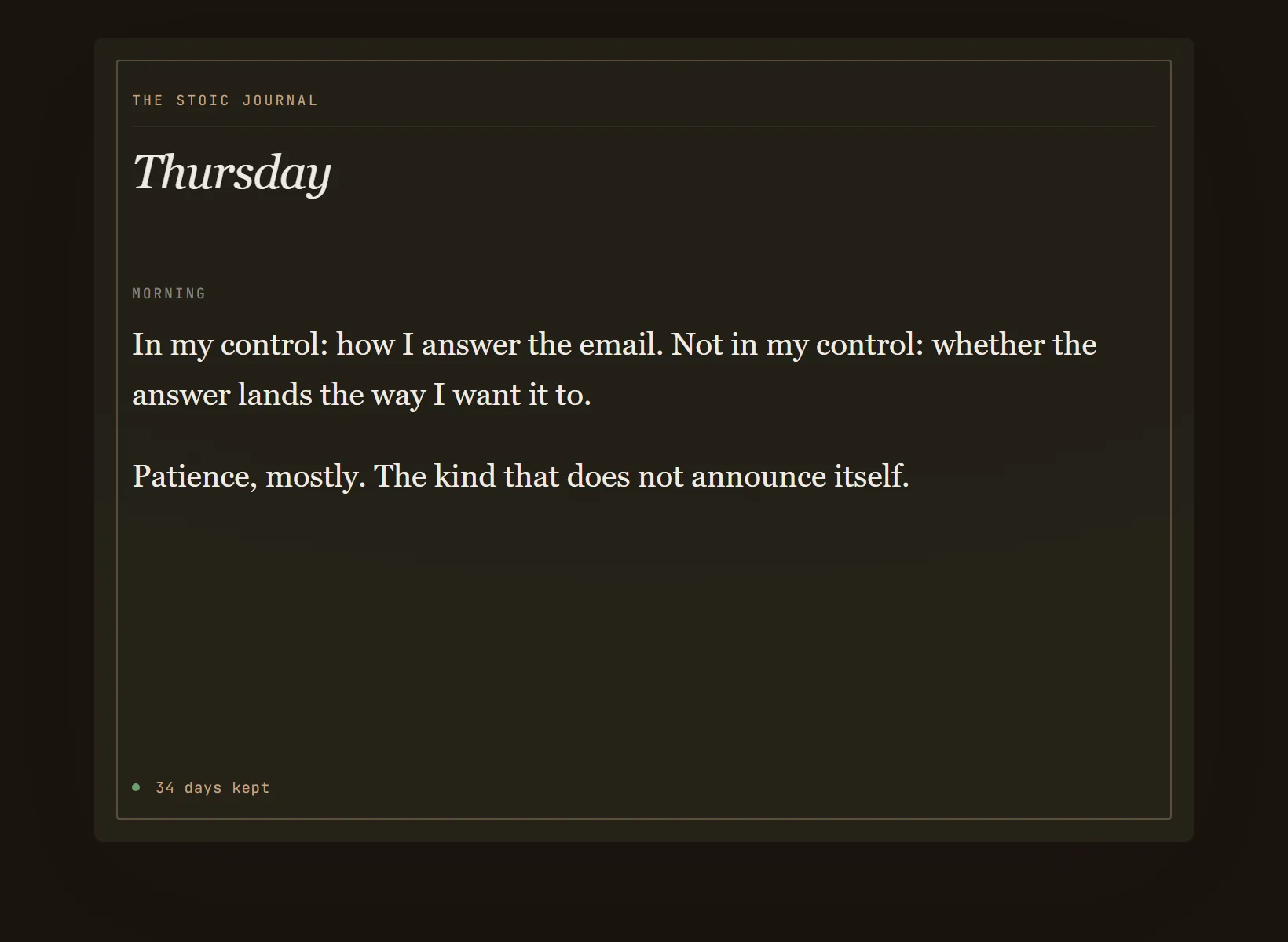
The morning half and the evening half, both waiting when you open it. By March you can read back what you said was yours to control, and what came of it.
The blank page
Stoic journalling is easy to start and easy to turn into a performance, because the tradition comes with quotations attached. Marcus Aurelius was not writing for you. The page works when it sounds like you talking to yourself, badly, at six in the morning.
What it looks like
How to start a Stoic journal
Take the morning half first
Name what today may ask of you and what is not in your hands. Two lines is a real preparation.
Keep the evening review a look, not a verdict
What you did well, what you avoided. No score, and nothing carried into tomorrow as a debt.
Write your own words, not the quotations
Read the passage if it helps, then close it. A page of borrowed lines tells you nothing next year.
What this journal opens with
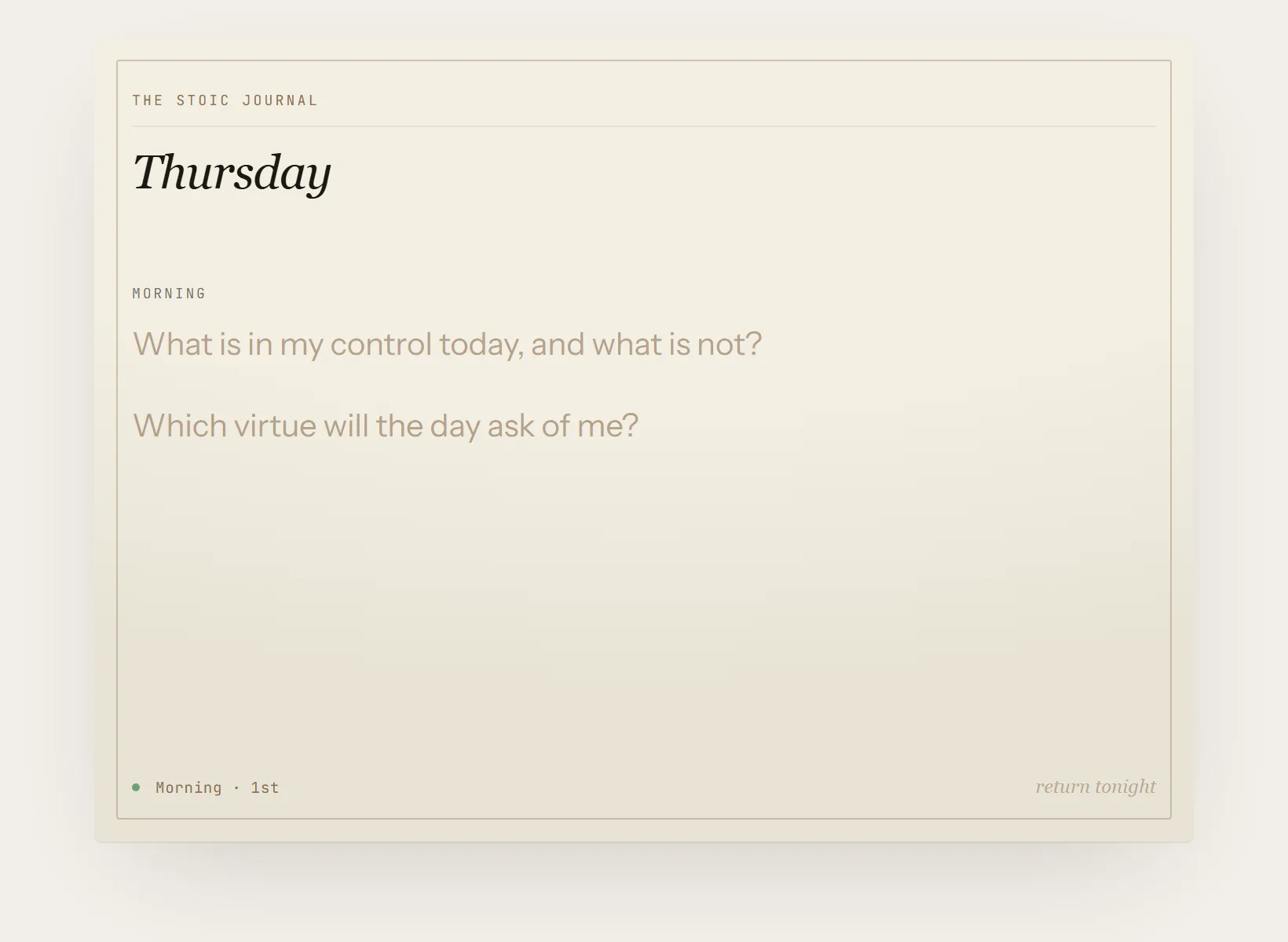
- What is in my control today, and what is not?
- Which virtue will the day ask of me?
A quiet start, never a form. Write past the prompt, ignore it, or make the page your own. The journal holds the shape; the words are yours.
Stoic Journal Prompts
Stoic journalling has two moments: a morning preparation that names what the day may ask of you, and an evening review that looks honestly at how you met it. The prompts below follow that shape, and none of them are a scorecard.
- What is in your control today, and what plainly is not?
- What is the hardest thing likely to happen today, and how would you like to meet it?
- Who might be difficult today, and what would a generous reading of them be?
- What are you attached to today that you did not choose and cannot keep?
- What would you like to be said about how you handled today?
Private like a notebook
No ads. No trackers. Nothing trains on what you write. Search across years, sync between your devices, and export everything as Markdown or Day One whenever you like. How privacy works →
Part of Innerholm+. A good paper journal costs $30 to $40, for one chapter. Plus opens every edition for $40 a year, or $5 a month, and the free editions stay free because Plus pays for them.